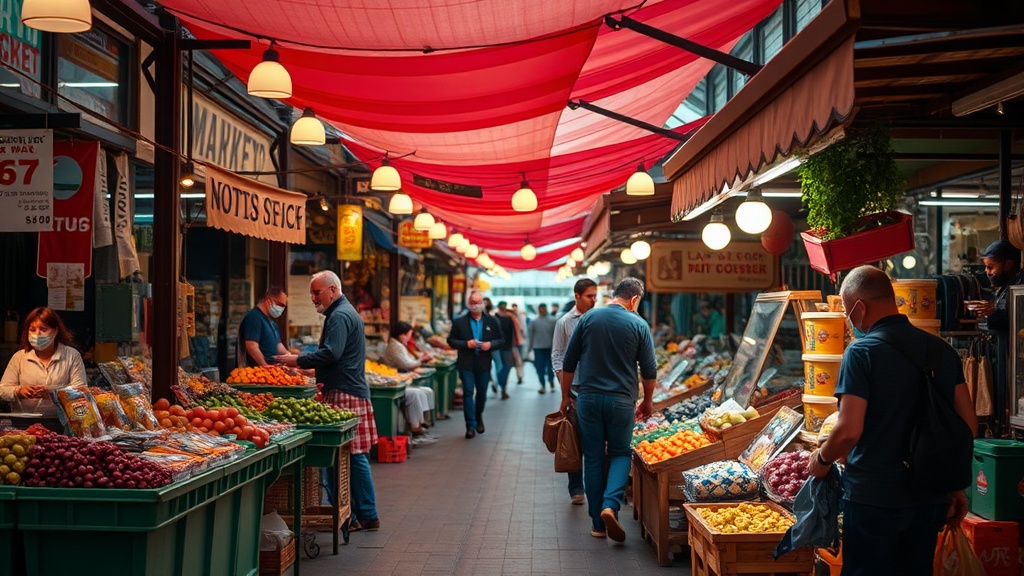
Navigating Local Markets Without a Map

Most travelers believe that a physical map or a high-speed data connection is the only way to find the best goods in a foreign market. They're wrong. Relying on a GPS to find a specific stall in a place like the Souk Madinat Jumeirah or a local wet market in Southeast Asia is a mistake because the best vendors often don't have a digital footprint. This guide breaks down the sensory-based systems used to identify quality, manage currency, and interact with vendors when your phone signal fails or your digital map simply doesn't exist.
How Do You Find Quality Goods Without a Digital Guide?
You find quality by observing the movement of local residents rather than looking at your screen. Locals are the most reliable indicator of a vendor's reputation and product freshness.
If you see a vendor surrounded by people chatting or a queue forming, that's your signal to stop. Don't just look at the product; look at the customer. Are they buying in bulk? Are they inspecting the produce with a specific level of scrutiny? In many traditional markets, the "best" stall isn't the one with the brightest sign, but the one where the local grandmothers are doing their daily shopping.
Watch the hands of the vendors. A skilled vendor in a spice market or a textile stall will demonstrate the texture and weight of an item with confidence. If they are hesitant or trying to rush you through a sale, walk away. This isn't just about being "picky"—it's about understanding the rhythm of the trade. In many parts of the world, the transaction is a slow-motion dance, not a quick swipe of a credit card.
Here is a quick checklist for assessing vendor quality on the fly:
- The Visual Cue: Is the stock replenished frequently, or does it look like it's been sitting out for hours?
- The Social Proof: Are locals interacting with the vendor, or is it only tourists?
- The Sensory Test: For food, does the aroma match the expected profile? (e.g., Does the cinnamon smell sharp or dusty?)
- The Tactile Check: If it's a textile or a hard good, does the weight feel substantial?
How Much Cash Should You Carry for a Market Trip?
You should carry a mix of small-denomination local notes and the equivalent of $20–$50 in USD or Euros for emergencies, depending on the region's stability.
Digital payments are a luxury in traditional markets. Even if a vendor accepts a mobile payment app, the connection often drops under the heavy metal roofing or in the dense crowds of a bazaar. Relying on a digital wallet is a recipe for frustration. Instead, carry physical cash in a secure, easily accessible way—not buried deep in a backpack, but not sitting in a transparent pocket either.
The goal is to have "transactional-sized" bills. If you try to pay for a $2 bag of oranges with a $50 bill, you might find the vendor unable to make change, or worse, they might decline the sale entirely. It’s a common friction point in many developing economies. I always recommend keeping a small pouch or a dedicated pocket in your clothing specifically for market cash. It keeps your primary wallet safe and makes the exchange feel less like a high-stakes negotiation.
Consider this breakdown of payment types for various market types:
| Market Type | Primary Payment Method | Recommended Backup |
|---|---|---|
| Traditional Spice/Textile Souk | Small Local Bills | USD (Large Denominations) |
| Modern Farmer's Market | Credit/Debit Card | Local Bank App/Mobile Pay |
| Street Food Stalls | Small Coins/Change | Small Local Notes |
| High-End Artisan Boutiques | Credit Card | Cash |
What Are the Unspoken Rules of Haggling?
Haggling is a social interaction, not a battle of wits, and it should always be approached with a smile and a respect for the vendor's livelihood.
In many cultures, the first price offered is rarely the final price. However, there is a fine line between a fair negotiation and being disrespectful. If a vendor offers a price, and you want to negotiate, don't just throw out a ridiculously low number. That’s a quick way to end the interaction. Instead, ask for the "local price" or simply express that the item is slightly outside your budget. It's a softer approach that keeps the door open.
The most important rule? Know when to walk away. If you've reached a point where neither of you is happy with the price, simply nod, thank them, and move to the next stall. Sometimes, the "walk-away" is the most effective negotiation tool you have. If they call you back with a better offer, you've won. If they don't, you haven't lost anything but a few minutes.
I've found that being a "polite negotiator" actually yields better results than being a "tough negotiator." A vendor is more likely to give a good price to someone who is friendly and shows genuine interest in the craft than to someone who is being aggressive. It's a subtle distinction, but it changes the entire energy of the transaction.
When you are shopping for items that are highly standardized—like a specific brand of tea or a mass-produced souvenir—don't bother haggling. It's a waste of time. Save your energy for the handmade, the artisanal, and the one-of-a-kind goods where the value is more subjective.
If you find yourself in an area where you're unsure of the local customs, look at how others are behaving. For instance, when I was in the markets near Istanbul, I noticed that the rhythm of the negotiation was almost rhythmic—a series of small questions and gestures rather than a blunt confrontation. It’s a skill you pick up by watching, not by reading a manual.
One thing to remember: never insult the quality of an item to lower the price. Saying "this is poorly made" is a direct insult to the person's work. Instead, say, "It's beautiful, but it's a bit more than I can spend today." It achieves the same goal without the social fallout.
The catch? Sometimes the best deals aren't found in the middle of the market at all. Often, the vendors on the periphery or the ones in the less-trafficked alleys have more room to move on prices because they aren't competing for the heavy foot traffic of the main thoroughfare. If you have the time, wander toward the edges. The quality might be slightly less "polished," but the authenticity is often much higher.
For more tips on navigating specific urban environments with intention, you might find my post on navigating Lisbon's streets helpful for understanding how to move through a city with ease.
Steps
- 1
Observe Before You Buy
- 2
Learn Basic Currency Phrases
- 3
Follow the Local Crowd
- 4
Carry Small Denominations