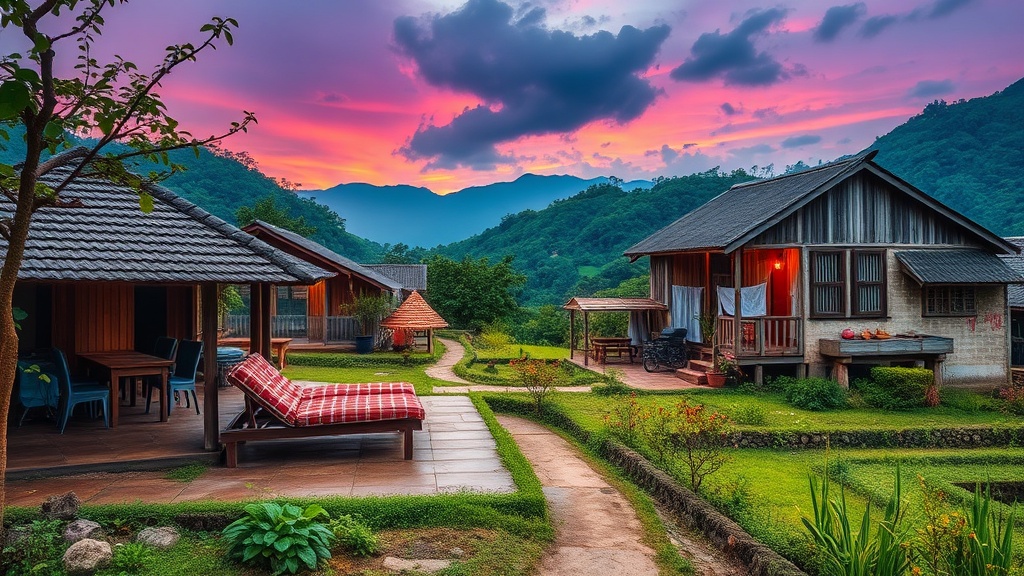
How to Find and Book Local Homestays in Rural Vietnam

The Data Behind the Shift in Vietnamese Tourism
While mainstream tourism in Vietnam remains heavily concentrated in hubs like Da Nang and Hoi An, recent hospitality data shows a 22% increase in demand for community-based tourism (CBT) in the northern highlands and central highlands. This shift is driven by travelers seeking cultural immersion over luxury amenities. Finding a legitimate homestay in rural Vietnam requires a different methodology than booking a hotel; you are not just booking a room, but often a seat at a family table. This guide provides a systematic approach to identifying, vetting, and booking authentic local stays in remote provinces like Ha Giang, Cao Bang, and Sapa.
Identify the Type of Homestay You Are Seeking
The term "homestay" is often used loosely in Southeast Asia. To avoid booking a boutique hotel that simply uses the label for marketing, you must distinguish between three specific categories:
- True Community-Based Homestays (CBT): These are often managed by local ethnic minority groups (such as the Hmong, Tay, or Dao). You sleep in a shared or private room within a family home, eat the same food as the family, and the revenue stays directly within the village.
- Farmstays: These are centered around agricultural production. You are staying on a working farm—often a coffee plantation in Da Lat or a rice terrace in Mu Cang Chai—where the primary activity is agricultural participation.
- Boutique Homestays: These are professionally managed properties that offer a "homestay aesthetic." They provide high-end amenities like en-suite bathrooms and Western-style breakfasts, but they are rarely integrated into the local village social fabric.
Where to Search: Reliable Platforms and Methods
Standard booking engines like Expedia or Booking.com are efficient for urban centers, but they often fail to capture the most authentic rural stays. To find high-quality, remote accommodations, use these three specific channels:
1. Specialized Local Aggregators
Platforms like Homestay.com have a much higher density of rural Vietnamese listings than general travel sites. When using these, look specifically for listings that mention "family meals included." In rural Vietnam, the social ritual of the evening meal is a core component of the homestay experience. If a listing does not mention communal dining, it is likely a standard guesthouse.
2. Google Maps and Localized Keywords
For the most remote areas, such as the Dong Van Karst Plateau Geopark, the best stays may not be on any major booking platform. Instead, use Google Maps to search for specific terms in English and Vietnamese. Search for "Homestay [Village Name]" or "Nha o khach [Province Name]". This method allows you to see real-time photos uploaded by travelers and, more importantly, the most recent reviews that reflect the current state of the property.
3. Regional Trekking Agencies
If you are planning a multi-day trek in Sapa or Ha Giang, booking through a reputable local trekking agency is often the most reliable way to secure a high-quality homestay. These agencies have established relationships with local families and can vouch for the quality of the bedding and the safety of the location. This is particularly useful for travelers who require a certain level of hygiene or specific dietary accommodations.
The Vetting Process: Three Non-Negotiable Metrics
Because rural homestays lack standardized grading systems, you must perform your own due diligence. Do not rely on the host's description alone. Use these three metrics to vet a property before you pay.
Metric 1: Sanitation and Bathroom Infrastructure
In rural Vietnam, "private bathroom" can mean different things. In many traditional stilt houses, the bathroom is a separate structure outside the main living area. If you require an en-suite bathroom, you must explicitly confirm this. Look at the user-submitted photos on Google Maps or TripAdvisor. If the photos show a bucket and a plastic scoop (a common setup), it is a traditional facility. If you see a modern toilet and tiled floor, it is a modernized facility.
2. Metric 2: Connectivity and Power Stability
In provinces like Cao Bang or the mountainous regions of Yen Bai, electricity can be intermittent, especially during the monsoon season or heavy wind. If your travel requires digital connectivity, check reviews for mentions of "Wi-Fi strength" or "Power outages." Most rural homestays offer Wi-Fi in common areas, but it is often unreliable in individual rooms. If you are traveling for work, assume you will not have consistent high-speed internet.
Metric 3: Cultural Authenticity vs. Commercialization
To ensure you are supporting a local community rather than a commercialized tourist trap, check the "About the Host" section. A legitimate homestay should mention the specific ethnic group or the family history of the home. If the description focuses heavily on "luxury amenities" and "spa services," it is likely a commercialized guesthouse rather than a traditional homestay. For more context on why choosing authentic, slower-paced travel is beneficial, read our guide on why you should spend a week in a Portuguese village, which highlights the value of slow, community-integrated travel.
Practical Logistics: Transport and Communication
Reaching a rural homestay is often the most difficult part of the journey. Once you have booked, you must plan the "last mile" of your trip.
- The "Last Mile" Transport: Most homestays in the northern highlands are not accessible by large tour buses. You will likely arrive via a "sleeper bus" to a regional hub (like Ha Giang City or Sapa Town) and then need to transition to a motorbike or a local "xe om" (motorbike taxi). Always message the host via WhatsApp or Zalo—the most common messaging app in Vietnam—to ask for the exact GPS coordinates of their home.
- Language Barriers: In rural areas, English proficiency is extremely low. Do not rely on verbal communication. Download the Google Translate app and ensure you have the Vietnamese language pack downloaded for offline use. Use the "Camera" feature to translate menus or handwritten signs in real-time.
- Cash Requirements: Most rural homestays do not accept credit cards or even digital payments like PayPal. You must carry sufficient Vietnamese Dong (VND) in cash. ATMs are rare in mountain villages, so withdraw enough cash in the nearest major city (e.g., Hanoi or Lao Cai) before heading into the mountains.
Packing Essentials for Rural Stays
The amenities in a rural Vietnamese homestay will be significantly different from a city hotel. To ensure comfort, pack the following specific items:
- A High-Quality Power Bank: Since power outages can occur in remote provinces, a high-capacity power bank is essential for keeping your phone and camera charged.
- Personal Hygiene Kit: While many homestays provide basic soap, they rarely provide high-end toiletries. Pack your own travel-sized shampoo, conditioner, and toothbrushes.
- A Microfiber Towel: These dry much faster than standard cotton towels, which is crucial in the humid, high-altitude environments of Northern Vietnam.
- Insect Repellent and First Aid: Rural areas are prone to mosquitoes and insects. A reliable repellent and a small kit containing antihistamines and basic wound care are mandatory.
By following this methodology, you move beyond the "vibe" of travel and into a structured, intentional way of exploring the world. A rural Vietnamese homestay is a high-reward endeavor that requires more planning than a standard hotel booking, but the cultural dividends are significantly higher.
Steps
- 1
Research local villages via community forums
- 2
Use specialized local booking platforms
- 3
Communicate clearly using translation tools
- 4
Confirm amenities and meal inclusions