Hidden Coffee Rituals of the Ethiopian Highlands

The Roasting Ritual
The Scent of Frankincense
The Communal Pouring Tradition
A small ceramic pot sits over a bed of glowing coals. The scent of roasting green beans hits the air first—a sharp, nutty aroma that fills a room before the liquid even touches a cup. This isn't a quick caffeine fix grabbed at a drive-thru. It's a deliberate, multi-sensory process that dictates the pace of social life in the Ethiopian Highlands. This post examines the specific steps of the traditional Ethiopian coffee ceremony, the regional variations you'll encounter, and how to plan your visit to experience these rituals without being an intrusive tourist.
What is the Traditional Ethiopian Coffee Ceremony?
The traditional coffee ceremony, known as the Buna, is a multi-stage ritual involving the roasting, grinding, and brewing of coffee beans by hand, usually hosted by a woman in a domestic or community setting. It isn't just about the drink; it's a social contract. When you are invited to sit, you're being invited into a conversation.
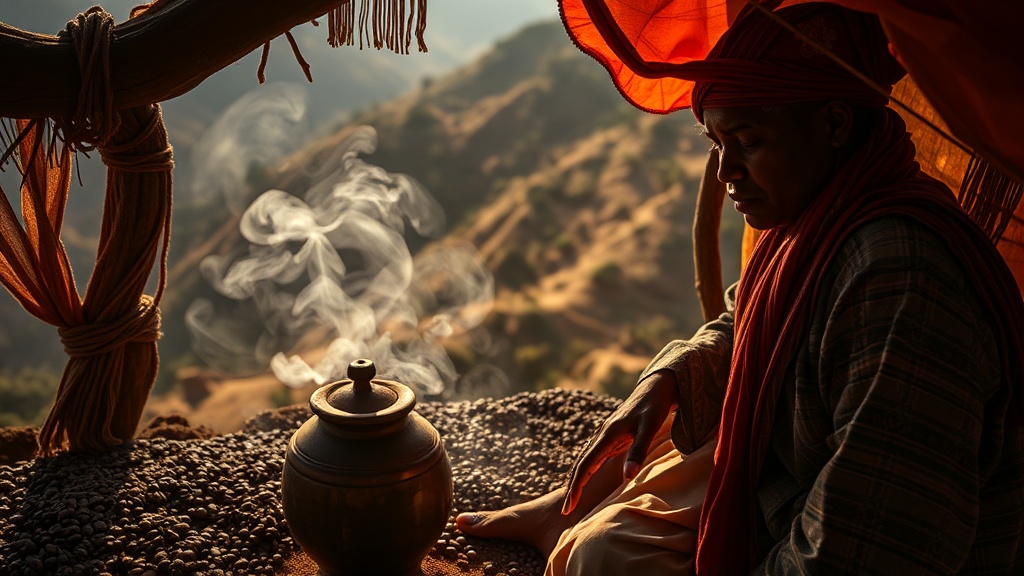
The process begins with washing the raw, green coffee beans. A woman—often the matriarch of the household—roasts them in a flat pan called a mankesha. As the beans darken and crackle, she carries the pan toward the guests so they can inhale the smoke. This isn't a gimmick. It's a way to share the fragrance of the fresh roast.
Once the beans are ground using a mortar and pestle, they are brewed in a jebena. This is a clay pot with a spherical base and a long neck. The coffee is poured from a height into small, handleless ceramic cups called cini. This technique creates a slight froth and ensures the pour is consistent. It's a slow process—expect to spend at least an hour sitting in one spot.
It's worth noting that the ceremony is often accompanied by traditional snacks. You might be served popcorn, roasted barley, or pieces of bread. If you're traveling through the highlands, don't be surprised if the coffee is served with a side of salt or even a bit of butter in certain rural pockets—it's a local way to balance the bitterness of the dark roast.
The Three Rounds of Coffee
The ceremony isn't a single pour. It's a sequence of three distinct rounds, each with a different name and a different spiritual significance. If you're a traveler trying to understand the etiquette, keep these names in mind:
- Abol: The first round. This is the strongest, most potent cup. It's meant to wake up the senses.
- Tona: The second round. The water is added again to the grounds. It's slightly weaker than the first.
- Bereka: The third round. This is the "blessing" round. It is considered the most spiritual part of the process.
If you leave after the first cup, you've missed the point. The social bond is built through the repetition of these three rounds. It's a rhythm that forces you to slow down—a stark contrast to the "grab-and-go" culture of Western coffee shops.
Where Can You Experience Authentic Coffee Rituals?
You can find authentic coffee ceremonies in almost every Ethiopian home, but the experience varies significantly depending on whether you are in a bustling urban center like Addis Ababa or a remote village in the Simien Mountains. For the most immersive experience, look toward the rural highland regions.
In Addis Ababa, you'll find more "polished" versions of the ceremony in high-end restaurants or specialized cafes. These are great if you want a controlled environment, but they lack the raw, communal energy of a village setting. If you want the real deal, head toward the northern highlands or the coffee-growing regions like Kaffa. The history of coffee culture is deeply rooted in these areas, and the ritual feels much more organic when it's happening in a local home or a community center.
For those who prefer a more structured way to travel, booking a local guide through an official Ethiopian tourism board or a reputable local agency is a smart move. This ensures you aren't just a spectator but a guest. A guide can help translate the nuances of the conversation happening around you, which is often just as important as the coffee itself.
| Location Type | Vibe | Best For |
|---|---|---|
| Urban Cafe (Addis Ababa) | Polished, predictable | Quick social breaks between meetings |
| Traditional Restaurant | Cultural, comfortable | Travelers wanting a "safe" cultural experience |
| Rural Highland Village | Raw, deeply communal | Immersive, authentic cultural connection |
How Much Does a Coffee Ceremony Cost?
The cost of a coffee ceremony varies wildly, ranging from a few cents for a local cup in a village to the price of a full meal in a city restaurant. In a rural setting, you aren't usually "paying" for the ceremony; you are often a guest of a family or a community, and a small tip or a gift of bread/sugar is a much more appropriate gesture than trying to hand over a credit card.
In a city-based cafe, expect to pay between 50 and 150 Ethiopian Birr (roughly $1 to $3 USD) for a standard service. If you're in a higher-end establishment, the price might rise, but it remains incredibly affordable compared to European or American coffee standards. Just keep in mind that exchange rates can be volatile, so having small denominations of local currency is a must.
The ritual is a way to connect with the local way of life. While I was researching the logistical side of travel in East Africa, I realized that the most valuable "currency" here is time and respect. If you're invited into a home, don't reach for your wallet immediately. Instead, wait for the host to signal the end of the ritual, and then offer a gesture of thanks.
If you're looking for ways to make your travel more seamless, you might find it helpful to read about why you should buy a local SIM card at the airport, as staying connected can help you navigate transport to these remote regions. Having a reliable map or translation app is a lifesaver when you're trying to find a specific village known for its coffee production.
The ritual is also a way to understand the local geography. The coffee used in the highlands is often grown in the very soil you're standing on. This makes the experience a direct link to the land. It's a physical connection to the environment that you won't find in a Starbucks. The beans are often high-altitude Arabica, which provides a bright, acidic profile that is quite different from the heavy, dark roasts common in the West.
One thing to watch out for: the smoke. The roasting process involves burning incense alongside the coffee beans. If you have any respiratory sensitivities, be aware that the air in these small, often enclosed spaces can become quite thick with aromatic smoke. It's part of the charm, but it can be intense for the uninitiated.
The coffee ceremony is a masterclass in patience. In a world that's constantly optimizing for speed, the Ethiopian highlands offer a beautiful, stubborn resistance to the clock. It's a reminder that some things—like a good conversation and a perfect cup of coffee—cannot be rushed.