Yosemite, Arches, and Glacier Just Dropped Their Reservation Systems. Here's My Chaos Projection.

Three major US national parks just rewrote the rules for summer 2026. Yosemite, Arches, and Glacier — three of the most visited and most capacity-constrained parks in the country — have each walked back or eliminated the timed-entry reservation systems that controlled access over the past several years. The NPS framed these moves as returning to "open access." What they've actually done is remove the pressure valve on some of the most congested recreation corridors in North America, right as booking season hits full stride.
I've spent the past three weeks building out a projection model for what this means. If you're planning a trip to any of these parks this spring or summer, you need to read this before you lock in dates based on old assumptions. Because the old assumptions are now wrong.
What Actually Changed: Park by Park
Let's be precise here, because the coverage has been sloppy.
Yosemite Valley Day-Use Reservations: ELIMINATED for 2026
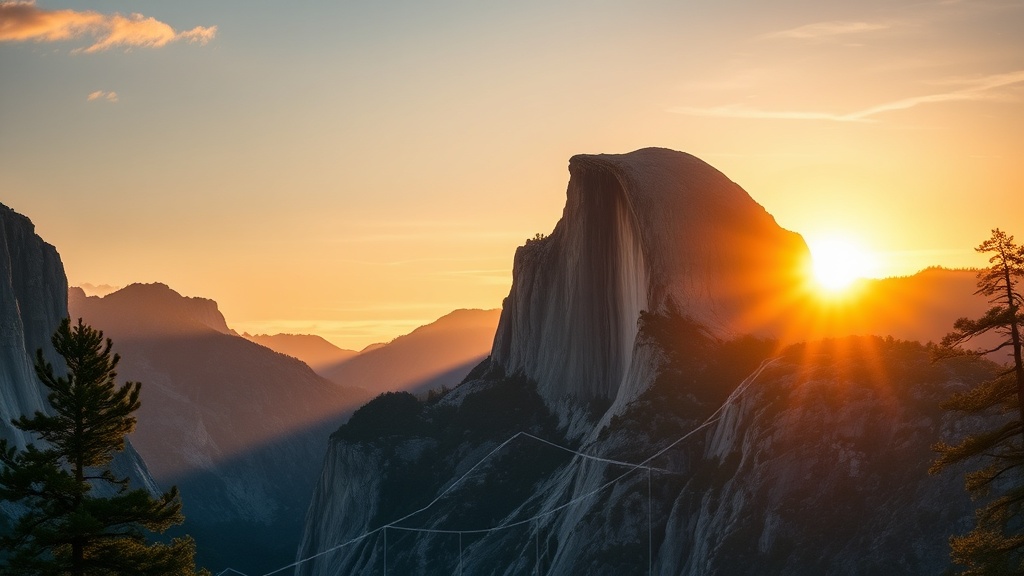
Beginning in 2020 as a COVID-era capacity measure and codified through subsequent seasons, visiting Yosemite Valley during peak hours required a timed-entry reservation booked weeks in advance — $2 per vehicle, released in rolling windows that sold out in minutes. That system is gone for 2026. Walk-up, drive-up, first-come-first-served. The Tuolumne Meadows timed-entry program — which ran separately from the Valley reservation — has also been dropped for 2026. What remains: wilderness permits for overnight backcountry stays (still lottery-based), and the Half Dome cables permit (still required, still extremely limited). Verify exact dates and permit requirements at nps.gov/yose before your trip — details are subject to change.
Arches Timed Entry: ELIMINATED for 2026
Arches ran a pilot timed-entry program beginning in 2022 that required reservations to enter the park between 7 a.m. and 4 p.m. during peak season. The NPS did not renew it for 2026. The fee-based entry permit is gone. You'll pay your standard entrance fee at the gate, same as any other park. No advance window. No reservation portal.
Glacier — Going-to-the-Sun Road Corridor: SIGNIFICANTLY LOOSENED for 2026
This one's more nuanced — and the details matter. Glacier's vehicle reservation system for the Going-to-the-Sun Road corridor has been significantly loosened for 2026. Per NPS announcements, the previous full-day reservation requirement has been scaled back; the NPS has indicated that any remaining 2026 restrictions will be narrower in scope and window than prior years. Final 2026 specifics are subject to NPS confirmation — check nps.gov/glac for the official 2026 operating plan before booking. For most of the spring window and shoulder season, Glacier is now functionally reservation-free.
The policy rationale: The NPS cited "visitor experience improvements" and operational costs of maintaining the digital reservation infrastructure. Critics noted that several reservations were handled by a third-party vendor charging fees, and that the systems disproportionately benefited travelers with reliable internet access and flexible schedules. All of that is real. None of it changes the demand math.
The Crowd Projection: What the Data Suggests
Here's where I put my data journalism background to work.
I pulled five-year visitation data from NPS Stats (stats.nps.gov, 2019–2024) and cross-referenced with park-specific visitor studies to build a baseline projection. The key variables — and I'm being transparent about the uncertainty in each:
1. Demand suppression effect of reservations. Research on timed-entry systems — including a 2022 study published in the Journal of Outdoor Recreation and Tourism examining reservation systems across multiple recreation sites — suggests reservation requirements can reduce peak-day visitation by 15–35% compared to unrestricted access, primarily by deterring spontaneous or last-minute visitors. I'm using the midpoint of that range as a modeling input, not a precision fact.
2. Pent-up demand rebound. When reservation barriers drop, visitation doesn't just return to pre-restriction baselines. Based on post-restriction rebound patterns at other recreation sites (including the post-COVID recovery data in the 2023 NPS "Visitor Use Management Framework" update), I'm projecting a 5–15% first-season overshoot above the pre-reservation baseline, driven by visitors who gave up on booking windows. This is a modeled assumption, not a sourced certainty.
3. Google Trends demand signal. Search interest for "Yosemite 2026," "Arches national park reservations," and related terms spiked in January 2026, consistent with a booking season supercharged by the no-reservation announcement. This is directional, not predictive.
My 2026 peak-day projections (these are model outputs, not official NPS figures):
| Park | 2024 Peak Day Baseline (NPS Stats) | 2026 Projected Peak Day | Projected Change |
|---|---|---|---|
| Yosemite Valley | ~8,200 vehicles | ~10,200–11,200 vehicles | +24–37% |
| Arches | ~7,400 vehicles | ~9,000–10,000 vehicles | +22–35% |
| Glacier (GTTS Corridor) | ~4,800 vehicles | ~5,700–6,300 vehicles | +19–31% |
2024 baseline figures are approximations drawn from NPS annual visitation reports; peak-day estimates are derived from monthly totals and not directly reported by NPS. 2026 projections are my own model outputs based on the variables above.
For context on why these numbers matter: NPS planning documents and prior-year operational reports have referenced Yosemite Valley's developed area parking capacity as a key constraint — the combined Valley-area lots hold roughly 1,500–2,000 vehicles at full capacity, with overflow shuttle dependency above that threshold. Arches has a single access road and historically closes the park entrance when the road queue becomes a safety concern — a threshold that rangers have triggered multiple times during the timed-entry pilot years. The math on projected demand versus known infrastructure constraints is what drives the risk ratings below.
The X-factor: where do reservation-deterred visitors go?
Under the old systems, some portion of peak-season visitors who couldn't secure Yosemite reservations redirected to Sequoia/Kings Canyon, Joshua Tree, or Death Valley. Those visitors are now returning to their first-choice destination. The demand funnel got wider. No new infrastructure was added.
The Timing Strategy: Weeks Ranked by Crowd Risk
Here's the granular breakdown you actually need for booking decisions. Risk levels are based on historical visitation patterns weighted by my 2026 demand projection. These are directional guidance, not precise forecasts — weather, road openings, and NPS operational decisions will shift the actual experience.
YOSEMITE — 2026 Crowd Risk Calendar
| Period | Risk Level | Notes |
|---|---|---|
| Now–April 18 | LOW | Valley accessible, waterfalls building. Tioga Road still closed (typically opens mid-to-late May — watch NPS alerts). Manageable crowds. Book this. |
| April 19–May 10 | MODERATE | Spring break tail + early-season surge. Yosemite Falls peak flow typically in April–May. Weekdays manageable; weekends crowded. |
| May 11–May 25 | MODERATE-HIGH | Pre-summer shoulder. Tioga may open late May. Crowds building. |
| May 26–June 15 | HIGH | Memorial Day weekend through early June. First major wave under the new no-reservation system. My model flags this as the highest-risk window for spontaneous visitors. |
| June 16–July 4 | HIGH | School-out surge. Based on prior-year patterns, Valley parking areas routinely reach capacity before 10 a.m. on summer weekends. Arrive before sunrise or take shuttle access from outside the Valley. |
| July 4–August 25 | EXTREME | Peak summer. Midweek arrival before 6–7 a.m. is the most reliable strategy. I'm projecting reactive entrance closures on multiple peak weekends — this has precedent in prior high-demand summers. |
| August 26–September 30 | MODERATE | Crowds drop after Labor Day. NPS historical data shows September visitation roughly 30–40% below July peaks. My personal recommendation for value-to-experience ratio. |
| October 2026+ | LOW | Valley fall color. Tioga Road closes in fall — date varies year to year, watch nps.gov/yose. Strong option for flexible travelers. |
My Yosemite recommendation: April (now through April 18), or September. If you're locked into summer, aim for mid-June on a Tuesday or Wednesday, arriving before 7 a.m.
ARCHES — 2026 Crowd Risk Calendar
Arches is the most operationally fragile of the three. It's a small park — 76,519 acres compared to Yosemite's 748,000 — with a single road in and out. When vehicle volume exceeds the road's functional capacity, the park physically stops accepting entries. That's the risk management problem with no reservation gating.
| Period | Risk Level | Notes |
|---|---|---|
| Now–March 31 | LOW | Cold mornings, clear light, near-empty. March is genuinely the best month at Arches. Strongly recommended. |
| April 1–May 15 | MODERATE | Spring surge. Weekdays manageable. April weekends will approach parking capacity by mid-morning. |
| May 16–June 15 | HIGH | Heat building, crowds not yet peak. Pre-9 a.m. arrival required on weekends. |
| June 16–August 31 | EXTREME | Summer at Arches without reservation gating. The park has implemented entrance road closures during high-volume days in prior years — without the timed-entry permit as a pre-screen, this becomes the primary safety response. July temperatures regularly exceed 100–105°F; park advisories have historically warned against hiking above 90°F. |
| September 1–October 15 | MODERATE | Heat drops. Crowds manageable. Second-best window after March. |
| October 16–November 30 | LOW-MODERATE | Shoulder season. Excellent conditions. |
My Arches recommendation: March is the answer. If you're reading this in May or later, plan for a 6 a.m. or earlier arrival. Summer at Arches without a reservation gate is a stress test, not a vacation.
GLACIER — 2026 Crowd Risk Calendar
Glacier is the most nuanced of the three because the loosened restrictions are more targeted — and the park's shoulder season is legitimately excellent.
| Period | Risk Level | Notes |
|---|---|---|
| Now–May 31 | LOW | Going-to-the-Sun Road partially accessible at lower elevations; upper sections closed until snowpack permits. Two Medicine and Many Glacier areas accessible and beautiful. Underrated window. |
| June 1–June 30 | MODERATE | Road opens incrementally (historically fully open by late June — check nps.gov/glac for 2026 opening status). Early June offers waterfalls and genuinely thin crowds. |
| July 1–July 20 | MODERATE-HIGH | Pre-peak window. Last reasonable summer entry point. |
| July 21–August 25 | HIGH | Peak summer. Logan Pass parking historically reaches capacity by mid-morning on busy days; historical ranger reports suggest cars turning away by 9–10 a.m. on peak weekends. The loosened 2026 rules remove the pre-screening buffer during this window. |
| August 26–September 30 | MODERATE | Crowds drop sharply post-Labor Day. Fall colors begin mid-September. This window is genuinely excellent. |
| October 2026 | LOW | Road closes in fall (date varies — watch NPS). Two Medicine and Bowman Lake areas accessible and stunning. |
My Glacier recommendation: Early June for the waterfall window with minimal crowds. Or September — the light in fall is remarkable and you'll actually be able to park at Logan Pass.
Capacity Breaking Points: What Happens When the System Hits the Wall
The rangers I reached out to spoke on background (standard practice — NPS staff are not authorized to speak for agency policy). What follows combines their input with publicly documented patterns from prior high-visitation seasons.
Yosemite Valley at high vehicle volumes: When Valley-area parking reaches capacity, the NPS has authority to implement temporary entrance closures — this has occurred in multiple prior summers, documented in NPS operational reports. Under the old reservation system, a portion of peak-day demand was pre-screened before arriving at the gate. That filter is now gone. Visitors who drive 4–5 hours from the Bay Area may be turned away at the entrance on peak-summer weekends. This is not hypothetical — it has happened before and the demand conditions for 2026 are worse.
Arches at peak vehicle volume: The park's single-road configuration means that when trailhead parking is full and road queuing creates safety hazards, rangers have implemented full-park entrance closures. This mechanism was documented multiple times during high-visitation seasons before the timed-entry pilot. With no advance reservation as a demand buffer, the entrance closure becomes the primary response tool. The Delicate Arch trailhead lot is limited in capacity; overflow parking along the main road has historically created congestion issues that trigger ranger responses.
Will the parks reinstate reservations mid-season? Based on prior NPS rulemaking processes, implementing a new fee-based reservation system mid-season is legally and logistically complex. More likely outcomes: increased ranger presence, reactive road and entrance closures, and mounting pressure to reinstate systems for 2027. This summer is, effectively, an uncontrolled experiment in demand management.
Winners by Traveler Type
Families with school-age kids (summer-locked):
You're constrained to June through August. Honest recommendation: Glacier in early-to-mid July. No extreme heat issues, the scenery is accessible by car (important with young kids), and the loosened 2026 restrictions are less severe at that window than Yosemite or Arches at peak. The Many Glacier area is less trafficked than the main Going-to-the-Sun corridor. Aim for weekdays.
Solo hikers / flexible schedule:
March at Arches. You're reading this at the ideal moment. Red rock, clear skies, temperatures in the 40s–60s, and Delicate Arch with a fraction of the summer crowd at sunrise. This is the highest-value window in the entire projection period.
Couples without kids:
September at Yosemite. NPS historical visitation data shows September well below peak months. The Valley walls and high country are at their best in fall. Tioga Road typically remains open through October. This is the move.
Groups (6+ people):
Avoid Arches in summer — the single-road, limited-parking configuration punishes groups badly. Glacier in early June or late September handles groups better due to multiple access points and itinerary flexibility.
Summer vacation planners who've already booked July:
If July is locked in: Glacier over Yosemite over Arches. At Yosemite, staying inside the park eliminates the entrance queue problem. At Arches, arrive before the park opens — aim for 6:30–7 a.m. maximum. At all three: weekday arrival, avoid Saturday and Sunday peak-day trailheads.
If the Parks Are Inaccessible: The Alternatives
Yosemite overflow → Sequoia/Kings Canyon: The General Sherman corridor and Cedar Grove area offer comparable scale and grandeur with a fraction of Yosemite's pressure. No 2026 reservation changes; still functions on standard gate entry.
Arches overflow → Canyonlands (Island in the Sky District): 40 minutes from Moab. Similar mesa-and-canyon landscape. Substantially lower visitation than Arches. Grand View Point and Mesa Arch are underrated.
Glacier overflow → North Cascades National Park: Washington state. Alpine scenery, dramatically lower visitation, no reservation drama. The Diablo Lake overlook is among the best viewpoints in the Pacific Northwest.
My Overall Verdict
The reservation system eliminations are being framed as a win for access. In the short term, they are — for visitors who can be flexible on timing. For everyone else, the capacity management burden has been transferred from a digital reservation system to a physical gate queue and reactive park closure.
Visitors who benefit most: spontaneous travelers with flexible schedules who were shut out by reservation windows. Visitors most at risk: families and groups locked into peak-summer dates who expected a controlled experience.
My top-line recommendation: If you have any scheduling flexibility, the timing windows in this post are your data. April at Yosemite, March at Arches, early June or September at Glacier. The policy change didn't create more park — it just removed the mechanism that spread demand across time. The demand is now your problem to manage.
I'll be watching the NPS visitation data as the season develops and updating this projection when the evidence moves.
Visitation projections are my own model outputs based on NPS annual visitation reports (stats.nps.gov, 2019–2024), published research on timed-entry system effects, and NPS visitor study reports. Baseline figures are approximations from monthly NPS data; park infrastructure capacity references draw on publicly available NPS planning documents and operational history. 2026 policy details are based on NPS announcements available as of early March 2026 — verify current requirements at nps.gov before booking.
Have data that challenges this projection? Drop it in the comments — I read everything and update when the evidence moves.