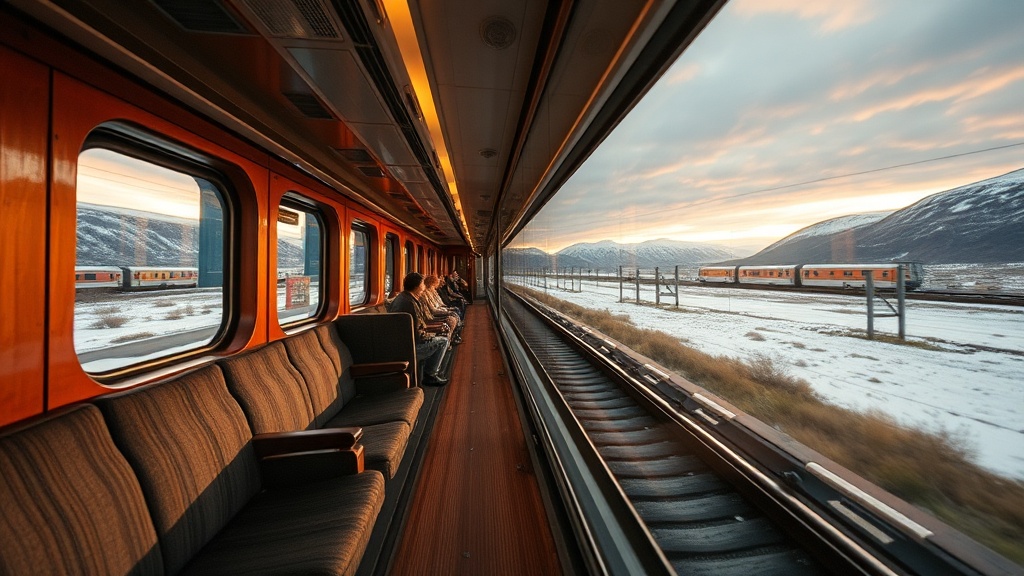
Why You Should Take a Slow Train Journey Through Scandinavia

Most travelers view long-distance train travel as a necessary inconvenience—a way to bridge the gap between two major hubs like Stockholm and Oslo. This perspective overlooks the primary utility of the Scandinavian rail network: the journey itself is the destination. This guide outlines why a slow train journey through Scandinavia offers a superior way to experience the geography of Northern Europe, how to select the right routes based on landscape, and the logistical requirements for booking a high-comfort transit experience.
The Efficiency of Slow Travel in Northern Europe
The misconception that flying is always the most efficient way to see Scandinavia ignores the topographical reality of the region. While a flight from Copenhagen to Bergen takes roughly 90 minutes, it offers zero visibility of the fjords or the mountainous interior. A train journey, while longer, provides a continuous, unobstructed view of the changing ecosystems, from the flat agricultural plains of Denmark to the dramatic verticality of the Norwegian fjords. By choosing the rail, you transition from a passive observer in a pressurized cabin to an active participant in the landscape.
Furthermore, the Scandinavian rail systems—specifically SJ (Sweden), Vy (Norway), and DSB (Denmark)—are engineered for high reliability and environmental sustainability. For travelers focused on reducing their carbon footprint, the rail network is the most logical choice. A single train journey through the Scandinavian peninsula produces a fraction of the COx emissions compared to a regional flight, making it a data-backed decision for the environmentally conscious planner.
Essential Routes for Landscape Diversity
To maximize the visual return on your time investment, you must select routes that offer significant topographical shifts. Not all rail lines in Scandinavia are created equal; some are utilitarian corridors, while others are scenic corridors.
The Bergen Line (Bergensbanen), Norway
This is arguably the most significant scenic rail route in Europe. Running from Oslo to Bergen, the line traverses the Hardangervidda plateau, Europe's largest high-mountain plateau. The transition from the forested valleys of eastern Norway to the stark, glacial landscapes of the high mountains provides a distinct visual narrative. The most critical section occurs as the train descends from the plateau toward the fjords, offering views of steep mountainsides that are inaccessible by car.
The Inlandsbanan, Sweden
If your goal is to see the Swedish interior, the Inlandsbanan is the primary route. This line runs north-south through the heart of Sweden, far from the coastal cities. It offers a look at the vast boreal forests, numerous lakes, and the changing vegetation as you move toward the Arctic Circle. It is a slower, more rugged experience than the high-speed X2000 lines, making it ideal for those who want to observe the rural Swedish way of life and the vastness of the northern wilderness.
The Øresund Connection, Denmark and Sweden
For a shorter, high-efficiency journey, the route connecting Copenhagen to Malmö via the Øresund Bridge provides a unique engineering perspective. This route demonstrates the seamless integration of Scandinavian infrastructure, moving from the flat, coastal landscapes of Denmark across a massive international bridge into the Swedish countryside. It is an excellent way to begin a larger Scandinavian itinerary.
Logistics and Class Selection
To ensure the journey is productive rather than exhausting, you must understand the tier system used by major operators. In Scandinavia, the difference between "Standard" and "First Class" (often called 1. Klasse or Pluss) is significant in terms of both utility and comfort.
- First Class (1. Klasse/Pluss): This is highly recommended for journeys exceeding four hours. Most operators, such as SJ, offer a quiet zone, complimentary coffee or tea, and more substantial seating. The increased legroom is a functional necessity for long-haul transit.
- Dining Cars (Bistro/Café): On long-distance routes like the Bergen Line, the dining car is a critical resource. Unlike budget airlines, these trains offer hot, sit-down meals. While prices are higher than local cafes, the ability to eat a warm meal while watching the landscape is a central component of the experience.
- Seat Reservations: Never travel on a long-distance Scandinavian route without a confirmed seat reservation. During peak summer months or holiday periods, "standing room only" is not an option for long-distance travelers.
When planning these trips, treat the train as your primary accommodation for the day. If you are planning your dream European vacation, the train should be viewed as a moving observation deck rather than just a transit method.
Technical Tips for Successful Rail Travel
Effective planning requires more than just buying a ticket. You must account for connectivity, luggage, and timing to ensure the journey remains a highlight of your trip.
1. Use Official Apps for Real-Time Data
Do not rely on third-party booking sites for real-time updates. Download the official apps for SJ (Sweden), Vy (Norway), and Entur (Norway). These apps provide real-time data on delays, platform changes, and even real-time GPS tracking of your train's position. This is vital for managing connections in major hubs like Oslo S or Stockholm Central.
2. Manage Your Connectivity
While most modern Scandinavian trains offer free Wi-Fi, it is often optimized for low-bandwidth tasks like messaging rather than high-definition streaming. If you intend to work during the journey, bring a local SIM card with a robust data plan (such as Telenor or Telia ) to ensure you have a reliable hotspot. However, the primary recommendation is to disconnect and focus on the visual input from the window.
3. Luggage Constraints
Train travel requires more mobility than air travel. While there are luggage racks at the end of each carriage and above the seats, you should avoid oversized hard-shell suitcases if you plan on making frequent transfers. A medium-sized backpack or a durable rolling bag that can be easily lifted into overhead compartments is the standard for efficient rail travel.
The Best Time to Travel
The visual experience of a Scandinavian train journey changes drastically based on the season. You must choose your timing based on the specific landscape you wish to see.
| Season | Visual Characteristics | Best For |
|---|---|---|
| Summer (June–August) | Lush green forests, bright daylight, clear blue water. | Maximum visibility and long daylight hours for sightseeing. |
| Autumn (September–October) | Changing foliage (oranges and yellows), misty mountains. | Photographers looking for high-contrast landscapes. |
| Winter (November–March) | Snow-covered peaks, frozen lakes, low-angle light. | The "Arctic" aesthetic and cozy, indoor comfort. |
Note that during the winter months, daylight is extremely limited, especially in Northern Sweden and Norway. If you are traveling the Bergen Line in December, much of your journey may take place in darkness. For those seeking the "Midnight Sun" effect, travel during the late June period is essential.
Summary Checklist for Planning
- Identify your primary route: Choose based on landscape (Fjords vs. Forests).
- Book Class: Select 1. Klasse for any journey over 3 hours.
- Download Official Apps: Install SJ, Vy, or Entur for real-time tracking.
- Verify Connections: Ensure you have at least 20 minutes of buffer time during transfers in major stations.
- Pack Light: Prioritize mobility and ease of storage in overhead racks.
By treating the train journey as a primary activity rather than a logistical gap, you gain access to the parts of Scandinavia that are invisible from 30,000 feet. The precision of the Scandinavian rail system allows for a structured, comfortable, and deeply immersive way to witness the changing geography of the North.