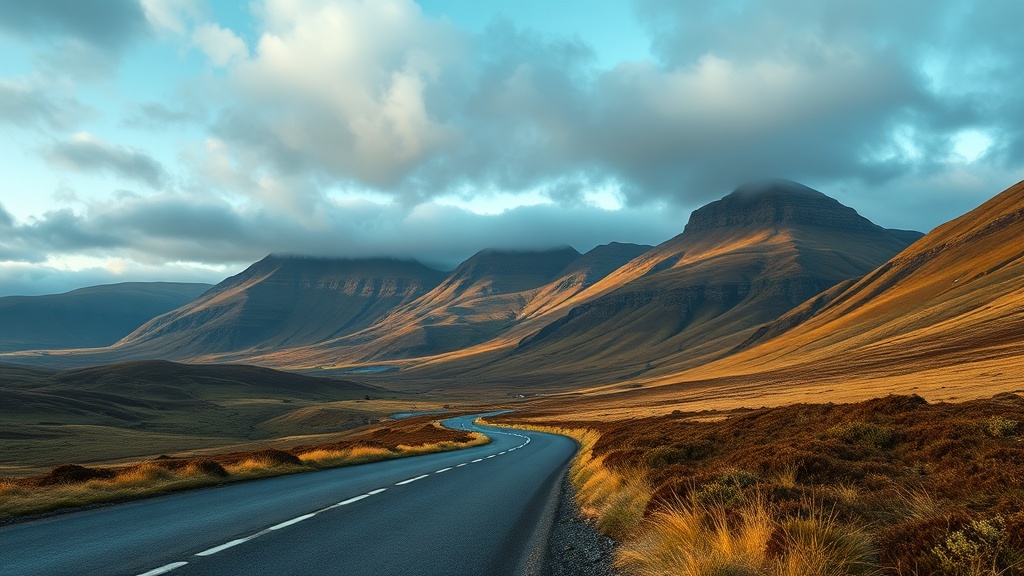
Why You Should Take a Road Trip Through the Scottish Highlands

The Magic of the North Coast 500 Route
Historic Castles and Ancient Folklore
Unmatched Wildlife and Nature Photography
The Charm of Remote Highland Villages
Many travelers assume that the Scottish Highlands are best experienced via organized coach tours or by sticking to the major rail lines between Inverness and Fort William. This misconception ignores the primary logistical advantage of the region: the density of micro-destinations that are inaccessible by public transport. A road trip through the Highlands allows you to control your pace, access remote coastal inlets, and navigate the specific topography of the North Coast 500 or the Isle of Skye on your own schedule. This guide outlines the logistical, scenic, and practical reasons why a self-drive itinerary is the most efficient way to see Northern Scotland.
The Autonomy of the Single-Track Road
The infrastructure of the Highlands is fundamentally different from the multi-lane highways of mainland Europe or the United States. Much of the most scenic territory is served by single-track roads with passing places. While this may seem daunting to drivers used to high-speed motorways, it is actually a functional tool for travel management. In a coach tour, you are tethered to a fixed schedule and a fixed stop. In a rental car, you can pull into a passing place to photograph a specific glen or wait for a herd of Highland cattle to cross the road without delaying a group of forty people.
When planning your route, understand that a "passing place" is not a parking lot. It is a functional piece of road engineering designed to allow vehicles to pass one another. Using these correctly—pulling into the left-hand side or waiting opposite a passing place on the right—is a skill that dictates your efficiency. A road trip allows you to master this local rhythm, giving you the freedom to explore the interior of Wester Ross or the rugged edges of Assynt, areas where bus frequency is often limited to once or twice a week.
Accessing the North Coast 500 (NC50)
The North Coast 500 has become a premier driving route, often compared to California’s Pacific Coast Highway, but with significantly more technical driving requirements. A road trip is the only way to truly experience the full breadth of this loop. While many people attempt to drive the entire route in a single week, the most effective way to manage the NC500 is to break it into segments centered around specific hubs like Thurso, Wick, or Ullapool.
- The West Coast Segment: This section offers the most dramatic geological formations, such as Stac Pollaidh and Suilven. Driving this stretch requires a vehicle with high ground clearance if you intend to venture toward any minor unpaved tracks.
- The North Coast Segment: This area is characterized by expansive beaches and white sand dunes. Driving through around Dunnet Head provides access to the most northerly point of the British mainland, a feat difficult to achieve via standard transit.
- The East Coast Segment: This is a more streamlined drive, ideal for reaching the historic castles of Caithness and the highly regarded whisky distilleries in the Speyside region.
If you are planning a multi-destination European tour, understanding how to navigate these specific regional routes is a foundational skill. For more general advice on structuring complex itineraries, see the ultimate first-timer's guide to planning your dream European vacation.
The Logistics of Remote Accommodations
One of the strongest arguments for a road trip is the variety of lodging available in the Highlands. High-end hotels are concentrated in hubs like Inverness or Aviemore, but the true character of the region lies in its smaller-scale accommodations. These are often located several miles off the main A-roads, making them inaccessible to those relying on trains or buses.
By driving, you can book stays in specific, niche locations such as:
- Luxury Pods: Modern, high-spec wooden pods often found near Loch Ness or the Isle of Skye.
- Historic Coaching Inns: Traditional stone buildings in villages like Applecross or Ullapool that serve as both lodging and community hubs.
- Estate Cottages: Private rentals located on larger Highland estates, offering isolation and direct access to hiking trails.
A car allows you to stay in these remote locations while still being able to access grocery stores and pharmacies in larger towns. Relying on public transport in the Highlands often means you are limited to staying in the town center, which can significantly increase the cost of accommodation during the peak summer months.
Culinary Freedom and Distilleries
The Highlands are a culinary destination, particularly regarding seafood and single malt whisky. However, the best experiences are often found in small, family-run establishments that do not have a connection to a transit line. For example, the seafood at the Loch Insh Seafood Restaurant or the small cafes in the village of Plockton are staples of the region, but they are difficult to reach without a vehicle.
Furthermore, the whisky experience in Scotland is deeply tied to the geography of the distilleries. Many of the most significant distilleries, such as Talisker on the Isle of Skye or Dalmore in the Highlands, are located in remote areas. A road trip allows you to visit these sites during the day and manage your own transport logistics. While you should never drink and drive, having a car allows you to stay in a nearby B&B after a distillery tour, rather than being forced to stay in a high-priced hotel in a major city to accommodate a train schedule.
Optimizing Your Itinerary: A Practical Framework
To ensure your road trip is successful, you must plan for the "friction" inherent in Highland travel. This means accounting for slower speeds and unpredictable weather. Do not plan your daily mileage based on standard highway expectations. A 50-mile stretch in the Highlands can easily take two hours if you are navigating single-track roads or encountering a slow-moving caravan.
- Rent a Compact or Mid-Sized Vehicle: Avoid large SUVs if possible. While they offer comfort, they are much more difficult to maneuver through narrow passing places and tight village streets. A smaller footprint provides better agility.
- Download Offline Maps: Cell service is notoriously unreliable in the glens and along the coast. Use Google Maps or specialized GPS tools, but ensure you have downloaded the offline area maps to your device before leaving your hotel.
- Fuel Management: Do not let your tank drop below a quarter. In remote areas like the Northwest Highlands, gas stations (petrol stations) can be 30 to 40 miles apart. Always refuel when you see a station, even if you have plenty of fuel left.
- Daylight Hours: In the summer, you will have long days, but in the shoulder seasons (May or September), the light fades quickly. Plan your most technical driving for daylight hours to ensure visibility of road signage and terrain changes.
A road trip through the Scottish Highlands is not just a way to see the sights; it is a method of experiencing the scale and isolation that defines the region. By choosing a car over a tour bus, you trade the ease of a set schedule for the ability to discover the parts of Scotland that remain unchanged by mass tourism.