Why You Should Spend a Night in a Traditional Riad in Marrakech

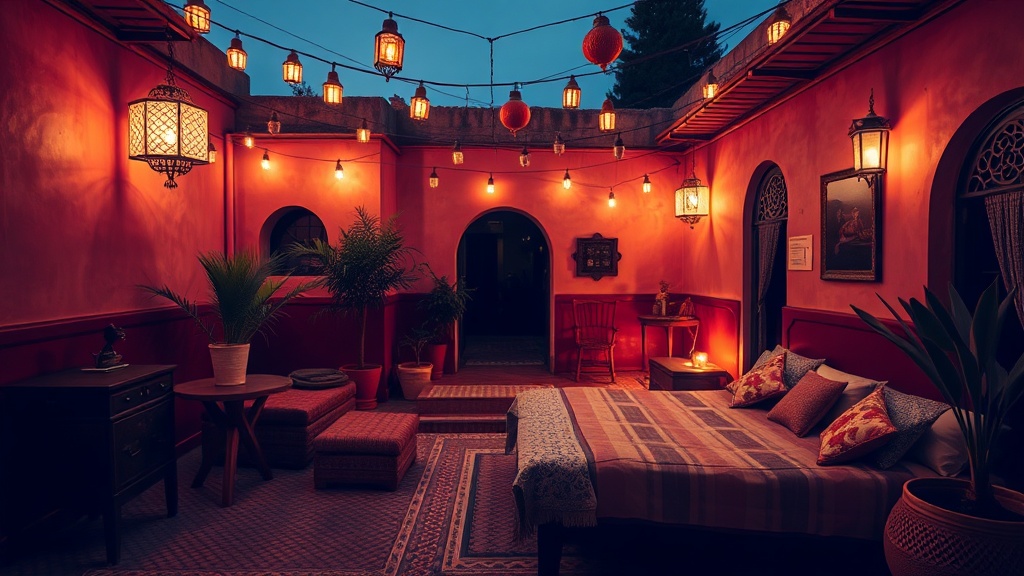
A traveler walks through a narrow, unmarked doorway in the Medina of Marrakech, leaving behind the noise of motorbikes and street vendors. Within seconds, the temperature drops, the acoustics shift from chaotic to silent, and the view opens into a central courtyard featuring a marble fountain and citrus trees. This is a traditional Riad. Choosing to stay in a Riad rather than a modern hotel is a strategic decision that dictates how much of the authentic Moroccan architectural heritage you will actually experience. This guide outlines the structural, cultural, and logistical reasons why a Riad stay is the superior way to experience Marrakech.
The Architectural Logic of the Riad
A Riad is not simply a "boutique hotel"; it is a specific architectural typology defined by an inward-facing design. Unlike Western buildings that prioritize outward-facing windows and street views, a Riad is built around a central courtyard (*patio*). This design serves three practical functions: climate control, privacy, and light management.
Natural Cooling and Microclimates
The central courtyard acts as a thermal regulator. In the heat of the Marrakech afternoon, the shaded courtyard and the presence of water—usually in the form of a fountain or a small pool—create a natural evaporative cooling effect. The thick masonry walls, often made of red clay or brick, provide high thermal mass, keeping the interior rooms cool during the day and releasing stored heat slowly at night. If you are planning a trip during the peak summer months (July and August), this architectural feature is a functional necessity rather than a stylistic choice.
Privacy and Acoustic Isolation
The Medina is a high-density urban environment. The streets are narrow, and the noise levels can be high due to foot traffic and transport. Because Riads are designed to look inward, the exterior walls are often windowless or feature very high, narrow slits. This creates a profound sense of isolation from the street. When you enter a Riad, you are entering a controlled environment where the sensory input is dictated by the courtyard, not the street. This makes Riads an ideal choice for travelers who require deep sleep or a quiet workspace while navigating a busy city.
What to Look For: Evaluating Riad Quality
Because the term "Riad" is often used loosely by booking platforms, you must look for specific indicators of authenticity and quality. A high-quality Riad should demonstrate mastery in three specific areas: Zellij, Tadelakt, and Mashrabiya.
- Zellij (Geometric Tilework): Look for authentic, hand-cut geometric tiles. High-end Riads will use intricate patterns that are part of the structural design, not just decorative accents.
- Tadelakt (Lime Plaster): This is a waterproof, polished lime plaster used on walls and in bathrooms. It is a traditional Moroccan technique that provides a smooth, marble-like finish. If a Riad uses standard industrial paint instead of Tadelakt, it is a sign of a modernized, less authentic build.
- Mashrabiya (Lattice Work): These are carved wood screens used for windows and balconies. They allow for airflow and light while maintaining privacy. A genuine Riad will utilize these to manage the transition between light and shadow.
When booking, check the number of rooms. A true Riad is typically a private residence converted into a guest house, meaning it will have a limited number of rooms (often between 5 and 12). If a property has 50+ rooms, it is likely a large-scale hotel built in a Riad style, which will lack the intimate service and specific spatial dimensions of a true traditional home.
The Logistics of Staying in the Medina
Staying in a Riad means staying in the heart of the Medina, which presents specific logistical challenges that you must plan for. Unlike staying in the Hivernage or Gueliz districts, where hotels are easily accessible by car, the Medina is a pedestrian-only zone.
Transportation and Luggage
Most streets in the Medina are too narrow for cars or even standard taxis. You will almost certainly have to walk from the nearest drop-off point to your Riad. This is a critical detail for travelers with heavy luggage. I recommend two specific strategies:
- Pre-arrange a Porter: Most reputable Riads offer a "meet and greet" service where a staff member meets you at the nearest taxi stand or car drop-off point to carry your bags through the alleys.
- Travel Light: If you do not pre-arrange a porter, use a backpack or a high-quality rolling bag with large, durable wheels. The cobblestones and uneven surfaces of the Medina can be punishing on standard luggage.
Navigating the Labyrinth
GPS and Google Maps are notoriously unreliable in the Medina due to the density of the buildings and the narrowness of the streets. The "blue dot" on your phone will often jump or fail to show your actual location. To avoid getting lost, use the following tactics:
- Ask for a Map/Directions: Before leaving your Riad for the day, ask the host for a written set of directions or a physical map.
- Identify Landmarks: Instead of relying on street names (which are often non-existent), learn the names of major landmarks near your Riad, such as a specific gate (*Bab*), a famous square, or a well-known spice shop.
- Use WhatsApp: Most Riad managers communicate via WhatsApp. Send them your live location or ask them to send you a photo of the street corner where you should meet your driver.
The Cultural Impact of Riad Hospitality
Staying in a Riad is a lesson in Moroccan social structures. In many cases, you are staying in a space that was once a private family home. This creates a different standard of service compared to a standard hotel. Service in a Riad is often highly personalized and revolves around the concept of hospitality (*Diyafa*).
It is common for hosts to offer traditional Moroccan mint tea (often called "Berber Whiskey") upon arrival. This is not just a beverage service; it is a ritual of welcome. You should also expect a high level of attention to detail regarding food. Many Riads offer breakfast prepared with ingredients sourced from the local markets. For example, you might be served Msemmen (flaky Moroccan pancakes) or Baghrir (semolina crepes) made fresh that morning. Because these establishments are smaller, the chefs often have a direct relationship with the local vendors, ensuring higher quality and freshness than large-scale hotel buffets.
If you are interested in how local food systems and traditional markets function, you may find it useful to read about why visiting a local market is superior to a supermarket in other cultural contexts. The same principle applies here: the Riad's reliance on the local ecosystem is what makes the experience authentic.
Summary Checklist for Riad Travelers
Before you finalize your booking, ensure you have addressed these four critical points:
- Accessibility: Have I confirmed how many meters I must walk from the nearest car drop-off point to the entrance?
- Amenities: Does the Riad have a pool or fountain in the courtyard? (Essential for cooling).
- Authenticity: Does the property description mention traditional materials like Zellij or Tadelakt?
- Connectivity: Does the Riad offer reliable Wi-Fi in the rooms, or is it only available in the common courtyard areas? (Crucial for remote workers).
By choosing a Riad, you are opting for a more complex, nuanced, and rewarding way to experience Marrakech. You are trading the predictable convenience of a modern hotel for the architectural depth and cultural intimacy of a traditional Moroccan home. When prepared with the right logistical knowledge, this choice will be the highlight of your journey.