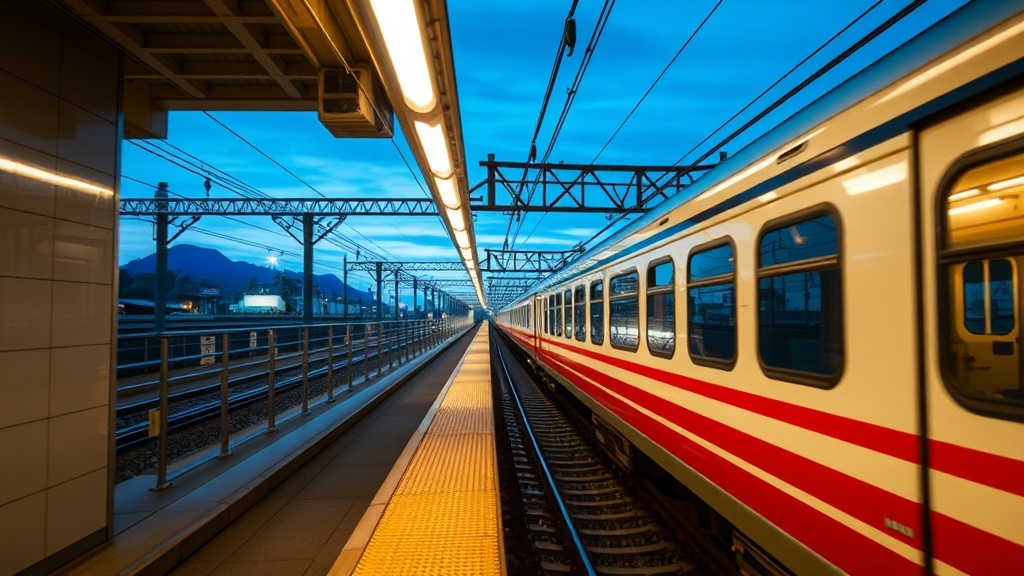
Analyzing the Logistics of Train Travel Through Japan

In 2023, Japan's rail network carried over 14 billion passengers, a figure that underscores its position as the most efficient transportation backbone in the developed world. For travelers, understanding the nuances of this system isn't about learning to love the scenery; it's about managing time, budget, and physical logistics. This guide breaks down the mechanical and economic realities of moving through the Japanese archipelago via rail, focusing on the technicalities of passes, seat reservations, and regional-specific transit rules.
Is the JR Pass Still a Logical Choice for International Travelers?
The math changed significantly in late 2023. For years, the Japan Rail Pass was a default recommendation for anyone visiting the Tokyo-Kyoto-Osaka corridor. However, the massive price hike (roughly 70% for many categories) means the pass is no longer a universal win. To determine if a pass makes sense for your specific itinerary, you must calculate the total cost of individual point-to-point tickets against the cost of the pass itself.
If your itinerary is strictly limited to the Tokyo-Nagoya-Kyoto-Osaka route, purchasing individual tickets or a regional pass (like the JR West Kansai Area Pass) often provides a better return on investment. The national JR Pass is now primarily suited for long-distance travelers who plan to cover vast distances across multiple regions—such as traveling from Tokyo to Kanazawa and then down to Kyushu—within a single seven or fourteen-day window. Without a high volume of long-distance travel, the pass can actually become a net loss.
Check the official Japan Rail Pass website for the most current pricing and availability, as these figures are updated periodically. Relying on outdated blog advice regarding the pass can result in hundreds of dollars of wasted capital.
How to Manage Seat Reservations and Shinkansen Boarding?
The Shinkansen (bullet train) operates on a precision-based schedule that allows for very little deviation. While much of the system allows for non-reserved cars, relying on them for long-distance travel is a high-risk strategy. If you arrive at the station with only a non-reserved ticket during a peak holiday or weekend, you might find yourself standing in the vestibule for the entire duration of the trip.
To avoid this, use the following protocols:
- Reserved Seats: Always book these in advance via the official JR East/JR West portals or at a Midori no Madoguchi (ticket office) when you arrive in the country.
- Luggage Rules: The Tokaido and Sanyo Shinkansen lines have specific rules regarding oversized baggage. If your suitcase exceeds certain dimensions, you must book a specific seat with an oversized luggage area. Failing to do so can lead to fines or being unable to board.
- SmartEX App: For those traveling primarily on the Tokaido line, the SmartEX app allows for digital booking and seat selection, which saves significant time at physical kiosks.
A typical high-speed path between Tokyo and Kyoto takes approximately 2 hours and 15 minutes. Having a reserved seat ensures you have a dedicated space for your gear, which is vital in a country where floor space is a premium.
What are the Differences Between Regional and National Rail Passes?
The complexity of the Japanese rail system lies in its fragmentation. While JR (Japan Railways) is the largest operator, it is not the only one. Many routes are managed by private companies or local municipal operators. This is where many travelers make a costly mistake: assuming a JR pass will work on a local subway or a private line like Kintetsu.
| Pass Type | Best For | Primary Coverage |
|---|---|---|
| National JR Pass | Long-distance, multi-region trips | Major JR lines nationwide |
| JR West Pass | Osaka, Kyoto, Nara, and Hiroshima | Western Japan and specific scenic routes |
| JR East Pass | Tokyo, Tohoku, and Niigata | Northern and Eastern Japan |
| Local IC Cards | Daily urban commuting | Subways, buses, and local trains |
For daily movement within a city like Tokyo or Osaka, a rail pass is often overkill. Instead, use an IC card (like Suica or Pasmo). These are rechargeable cards that you tap at the gate. They work on almost all local subways, buses, and even some local JR lines. They don't save you money on the fare itself, but they eliminate the need to purchase individual tickets for every single trip, which is a massive time-saver in high-frequency transit environments.
If your goal is to explore the mountainous regions of Takayama or the coast of Kanazawa, look for a specific regional pass. These are often much cheaper than the national pass and offer unlimited travel within a specific geographic boundary. The value is found in the density of your travel within that specific area.
When planning, always cross-reference your intended route on Google Maps or Navitime. A single mistake—like booking a JR pass for a route that is actually operated by a private line—can leave you stranded or forced to pay out-of-pocket for a new ticket. Precision in the planning phase is the only way to ensure a smooth transit experience.