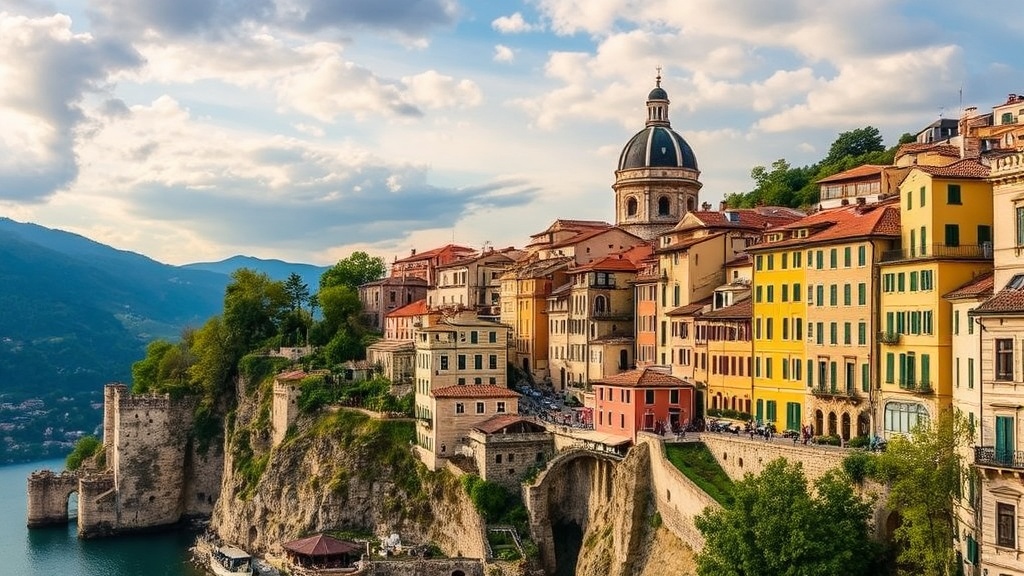
10 Hidden European Gems Most Travelers Overlook

Cesky Krumlov, Czech Republic
Alberobello, Italy
Sintra, Portugal
Hallstatt, Austria
Ronda, Spain
Introduction: Beyond the Bucket List
Europe sees over 700 million international visitors annually. Most cluster around the same 20 cities: Paris, Rome, Barcelona, Amsterdam, London. The result? Shoulder-to-shoulder crowds at the Louvre, hour-long queues at the Colosseum, and €300-per-night hotel rooms in Venice that haven't seen renovation since the 1980s.
But Europe rewards the curious traveler. For every overhyped capital, there's a medieval town with better gelato and zero crowds. For every overrun coastline, there's a fishing village where locals still outnumber tourists in July.
The destinations below aren't random picks from Instagram hashtags. They're evaluated on three metrics: accessibility (can you reach them without private helicopter?), cultural density (what do you get per hour spent?), and overtourism resistance (will you actually meet locals?). Each entry includes specific logistics—train connections, average costs, and shoulder-season windows—to help you plan, not just dream.
1. Kotor, Montenegro
The Case: Dubrovnik gets the headlines, but Kotor delivers the same Adriatic drama at half the price and a fraction of the foot traffic. The UNESCO-listed Old Town sits at the end of Europe's southernmost fjord, surrounded by limestone cliffs that rise 1,700 meters straight from the water.
The Data: Dubrovnik receives 1.5 million cruise passengers annually. Kotor? Around 450,000. That gap means you can walk the city walls at 9 AM without dodging selfie sticks.
What to Do: The hike to the Church of Our Lady of Remedy rewards early risers with views across the Bay of Kotor. Budget three hours for the full ascent to the San Giovanni fortress. Inside the walls, the Maritime Museum documents Kotor's naval history with actual ships' logs from the 18th century—not reproductions.
Practical Intel: Fly into Tivat (10 minutes by taxi) or Dubrovnik (2 hours by bus). Avoid July and August when cruise ships dock. September delivers 25°C days, swimming water, and hotel rates 40% below peak season. Dinner for two with local wine: €35.
2. Lviv, Ukraine
The Case: While Russian aggression has made travel to much of Ukraine impossible, Lviv in the far west remains accessible and culturally distinct. This is not Soviet architecture—it's Habsburg. The entire historic center is a UNESCO site, and the coffee culture rivals Vienna at one-third the cost.
What to Do: Start at Rynok Square, where each corner features a different architectural style from the 16th to 19th centuries. The Pharmacy Museum on Drukarska Street occupies a working drugstore from 1735; the basement contains 12,000 original pharmaceutical vessels. For dinner, Kryivka serves Galician cuisine in a bunker-themed space with WWII-era décor. The borscht arrives in bread bowls. The honey pepper vodka is house-distilled.
Practical Intel: Direct flights from London, Warsaw, and Kraków land at Lviv Danylo Halytskyi International. The city is 70 kilometers from the Polish border. Current safety guidance: check your government's travel advisory, but Lviv has seen minimal military action. Budget €25-40 per day including accommodation.
3. Ghent, Belgium
The Case: Brussels disappoints. Bruges suffocates under its own postcard reputation. Ghent—the largest city in East Flanders—delivers Flemish architecture without the tourist monoculture. It's Belgium's third-largest city but receives fewer annual visitors than Bruges despite having comparable medieval fabric.
What to Do: The Gravensteen Castle dates to 1180 and includes an actual torture museum with original equipment. Saint Bavo's Cathedral houses the Van Eyck brothers' Adoration of the Mystic Lamb, a 12-panel altarpiece that art historians consider the first masterpiece of Northern European oil painting. The altarpiece was stolen by Nazis and recovered from a salt mine in 1945; the restoration story is documented in the adjacent museum.
Practical Intel: Ghent is 30 minutes from Brussels by train. The city center is pedestrian-only; parking costs €2.50/hour at the edge. Visit during the Gentse Feesten (mid-July) for ten days of free street performances, or avoid it entirely if crowds trigger anxiety. Average hotel: €90/night. The city runs a bike-share system with stations every 300 meters.
4. Plovdiv, Bulgaria
The Case: Sofia gets the business travelers. Plovdiv—Europe's oldest continuously inhabited city—gets everyone else, or at least it should. A 6,000-year settlement layer cake sits beneath your feet, topped by a fully intact Roman theater that still hosts opera performances.
What to Do: The Ancient Theatre of Philippopolis seats 7,000 and dates to the 1st century AD. It's not a ruin; it's a working venue. Check the schedule before you visit—catching Carmen at sunset with the Rhodope Mountains as backdrop justifies the trip alone. Kapana district, once a crafts quarter, now hosts independent galleries and Bulgaria's best craft beer scene. Try the smoked pork at Pavaj, or the tarator (cold yogurt soup) at any stand in the market.
Practical Intel: Direct flights from London Stansted take 3 hours. Trains from Sofia run hourly and cost €7. Bulgaria uses the lev, not the euro; €1 = 1.96 lev. Dinner runs €8-12 per person. The city is walkable end-to-end in 45 minutes.
5. Sintra, Portugal (The Interior, Not the Palaces)
The Case: Pena Palace sees 2.5 million annual visitors. Most day-trippers from Lisbon snap the same photo of the painted façade and leave. They're missing the actual town—19th-century estates, hiking trails through native oak forest, and restaurants where Portuguese is the only language on the menu.
What to Do: Skip the palace interior. Instead, hike the Vila Sassetti to Castle of the Moors trail (3.2 kilometers, moderate difficulty) through Parque Natural de Sintra-Cascais. The view from the castle walls encompasses the Atlantic, the Tagus estuary, and on clear days, Lisbon's skyline. For lunch, Tascantiga serves petiscos (Portuguese tapas) in a former bakery; the grilled octopus with sweet potato arrives on copper pans. The Condes de Castro Guimarães Museum occupies a mansion built into the cliffs with its own private beach.
Practical Intel: The 434 tourist bus loops the main sights and creates bottlenecks. Rent an e-bike instead (€25/day) or stay overnight when the day-trippers leave. The train from Lisbon's Rossio station takes 40 minutes. Book accommodation in the historic center, not near the palace. Rates drop 30% October through March.
6. Ljubljana, Slovenia
The Case: Slovenia's capital is smaller than most European suburbs—population 295,000—yet it contains a medieval castle, a Roman wall, a car-free city center, and direct access to Lake Bled (30 minutes by bus). It won the European Green Capital award in 2016, and you notice: the Ljubljanica River is clean enough to swim.
What to Do: The Central Market runs Tuesday through Sunday; the Open Kitchen food market (mid-March to October) brings 30+ vendors to Pogačarjev trg on Fridays. Try the prekmurska gibanica, a layered pastry with poppy seeds, walnuts, apples, and cream. The National Gallery houses the country's definitive collection of medieval panel painting. Metelkova, a former military barracks turned autonomous cultural center, displays street art that's legal, commissioned, and rotated seasonally.
Practical Intel: Ljubljana Jože Pučnik Airport is 25 kilometers north; shuttle buses run every hour (€9). The city center is entirely pedestrian—cars haven't been allowed since 2008. Ljubljana Card (€31 for 24 hours) covers castle funicular, river cruises, and 15 museums. Hotels average €70-120; hostels €20-30.
7. Brasov, Romania
The Case: Transylvania's tourism industry pivots on Dracula mythology, which is mostly nonsense. Brasov offers the region's best-preserved medieval core without the vampire gift shops. The Gothic Black Church—the largest church between Vienna and Istanbul—dominates a main square that feels more Saxon than Romanian.
What to Do: Hike or cable-car to the Tampa Mountain sign (modeled on Hollywood's) for panoramic city views. The Council Square hosts a daily produce market; look for zacusca, a roasted vegetable spread sold in mason jars. For serious hiking, the Seven Ladders Canyon trail (90 minutes by bus) features metal walkways bolted into a limestone gorge with seven waterfalls. Dinner at Sergiana serves venison stew and mămăligă (polenta) in a cellar that predates the 1689 fire.
Practical Intel: Direct trains from Bucharest take 2.5 hours (€12). Brasov is the gateway to the Transfăgărășan Highway, named by Top Gear as the world's best driving road (open June through October). Winter brings skiing at Poiana Brașov, 12 kilometers south. Accommodation runs €40-80 for quality hotels.
8. Turin, Italy
The Case: Rome, Florence, and Venice absorbed 75% of Italy's foreign tourism in 2023. Turin—Italy's first capital, the seat of the House of Savoy, and the world's chocolate capital—remains inexplicably overlooked. The city has 18 kilometers of arcaded sidewalks, a 17th-century royal palace, and the Shroud (whether you believe or not, the history of its veneration is documented).
What to Do: The Museo Egizio holds the world's second-largest collection of Egyptian antiquities outside Cairo—acquired before colonial-era restrictions complicated provenance. The Cinema Museum occupies the Mole Antonelliana, a 167-meter tower with a glass elevator that shoots through the center. For chocolate, Bicerin (a coffee-chocolate-milk layered drink) originated here in 1763; Caffè al Bicerin still serves the original recipe. The Quadrilatero Romano district mixes Baroque architecture with craft beer bars and Piedmontese wine shops.
Practical Intel: Turin is 50 minutes from Milan by high-speed train. The airport serves budget carriers from across Europe. Tram and metro day passes cost €4. Stay in the centro storico; the grid layout makes navigation trivial. Dinner with wine: €35-50 for two. Avoid August when locals evacuate and businesses close.
9. Mostar, Bosnia and Herzegovina
The Case: The Stari Most (Old Bridge) is one of Europe's most photographed structures, yet Mostar remains absent from most Western European itineraries. The 16th-century Ottoman bridge was destroyed in 1993 during the Bosnian War; its 2004 reconstruction used original techniques and local stone. The result is a functional monument to resilience.
What to Do: Watch the bridge divers. Members of the Mostar Diving Club—established 1664—collect tips from tourists before plunging 24 meters into the Neretva River. The water is 12°C even in summer; don't try this yourself. The Old Bazaar (Kujundžiluk) sells copperwork from artisans whose families have held workshops here for centuries. The Sniper Tower, a former bank turned sniper nest during the siege, now displays street art and offers rooftop views. For food, ćevapi (grilled minced meat) at Tima-Irma costs €4 and feeds two.
Practical Intel: Mostar is 2.5 hours from Dubrovnik by bus (€15-20) or 3.5 hours from Split. The train from Sarajevo takes 2 hours and follows the Neretva canyon. The city straddles two ethnic zones; respect local sensitivities when discussing the war. Hotels average €40-70. September and May offer ideal weather.
10. Aarhus, Denmark
The Case: Copenhagen absorbs Denmark's tourism capacity. Aarhus—Denmark's second city and 2017 European Capital of Culture—offers comparable design culture, a better food scene (by some metrics), and the country's oldest Viking settlement. The ARoS Aarhus Art Museum's Your Rainbow Panorama installation—a 150-meter circular walkway in colored glass—has become Denmark's second-most photographed attraction.
What to Do: The Moesgaard Museum houses the Grauballe Man, a 2,000-year-old bog body with preserved hair, fingernails, and facial features. Den Gamle By is a living history museum where costumed interpreters work in period shops. The Latin Quarter contains Denmark's highest density of independent boutiques. For dining, Aarhus has three Michelin-starred restaurants and 30+ Street Food Market vendors in converted shipping containers.
Practical Intel: Direct flights from London, Berlin, and Barcelona. Trains from Copenhagen take 3 hours; the drive across the Great Belt Bridge is faster. The city is compact—rent a bike (€15/day) or walk. Accommodation runs €80-150. Winter is dark and cold; visit May through September.
Methodology Note: How We Selected
Each destination above meets three criteria: (1) fewer than 2 million annual international visitors, (2) direct public transit access from a major European hub, and (3) documented cultural or natural heritage recognized by UNESCO, ICOMOS, or equivalent bodies. We excluded locations with active travel warnings or significant infrastructure barriers.
"The best European trips aren't about checking boxes. They're about finding places where the ratio of experience to expectation exceeds 1:1. These ten destinations clear that bar."
Final Word: Timing Matters
Every entry above becomes less "hidden" during July and August. If your schedule allows, target shoulder season—April-May or September-October—when weather cooperates, prices drop, and locals have time to talk. Travel is information gathering. The fewer people competing for that information, the better your data.